
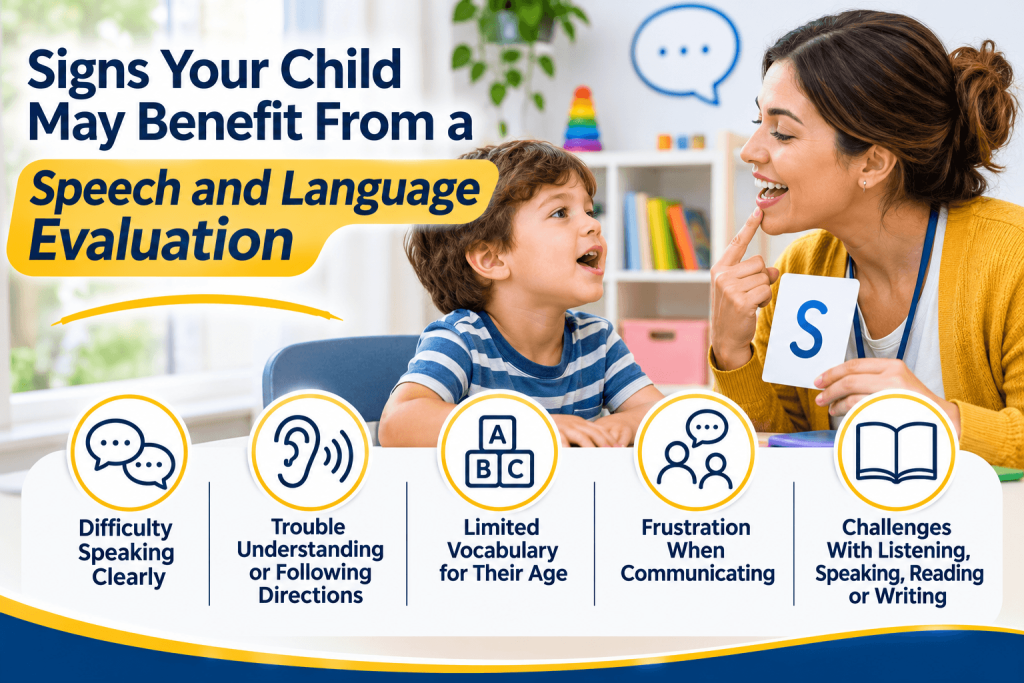
Children develop language at different rates, but some patterns are worth checking with a speech-language pathologist. If a child is not meeting typical milestones, is hard to understand for their age, or seems frustrated communicating, an evaluation can clarify whether support would help. Early evaluation is often reassuring even when no therapy is needed.
The American Speech-Language-Hearing Association offers milestone guides for parents. These signs can help you decide when to ask.
Common Signs Worth Discussing
- Few or no words by around 18 months, or limited two-word phrases by around age two.
- Speech that is hard for family members to understand for the child’s age.
- Difficulty following simple directions.
- Frequent frustration or tantrums linked to communication.
- Stuttering that lasts or causes the child distress.
- Loss of words or skills the child previously had, which should be checked promptly.
What an Evaluation Involves
A speech-language pathologist observes the child, plays language games, and asks parents about development and daily communication. The evaluation may cover understanding, expression, speech sounds, voice, fluency, and social communication. Hearing should also be checked, since hearing loss can affect speech.
Parents receive results and recommendations, which might include home activities, monitoring, or therapy sessions. Children under three may qualify for early intervention services through their state, and school districts evaluate older children.
Everyday Ways to Support Language
Talk with your child throughout the day, naming objects, describing actions, and asking simple questions. Read together often, pausing to let your child point, name, or predict what happens next. Limit background noise and screen time during play so conversations feel natural.
Respond to your child’s attempts to communicate, even when words are unclear, and model the correct word gently instead of correcting harshly. These habits help every child, whether or not therapy is recommended.
Share any concerns from teachers or caregivers with the therapist, since they see your child in different settings.
Choosing a Pediatric Speech Therapist
Look for a licensed speech-language pathologist, often holding the Certificate of Clinical Competence from ASHA. Ask about experience with your child’s age, how parents are involved in sessions, and insurance coverage. Therapy works best when families practice skills at home.
Parents can compare pediatric practices through FindingU’s healthcare listings to find an approach and schedule that fit the family. Comparing a few providers there helps parents find one whose approach and schedule fit their family.
When in Doubt, Ask
Missing milestones, unclear speech, frustration, persistent stuttering, or lost skills are good reasons to request a speech and language evaluation. Ask about hearing checks, early intervention, and parent involvement, and use FindingU to compare licensed pediatric speech therapists nearby.
Frequently asked questions
There is no single age. Parents can request an evaluation whenever they have concerns. Children under three may qualify for free or low-cost early intervention through their state, and pediatricians can help decide whether a referral makes sense. Trust your instincts and ask questions.
It depends on your insurance and the provider. Some plans require a physician referral for coverage, while families paying privately may book directly. Check with your insurer and the therapy practice before scheduling an evaluation. Ask about coverage before the first visit.
It varies widely based on the child's needs, goals, and progress. Some children need a few months, while others benefit from longer support. Therapists typically set goals, track progress, and adjust plans regularly with parents. Progress reviews help guide decisions.
Yes. Parents play a key role. Therapists often suggest simple activities, like reading together, naming objects during daily routines, and giving children time to respond. Practicing skills at home helps children use new abilities in everyday situations. Short daily practice works better than long sessions.