
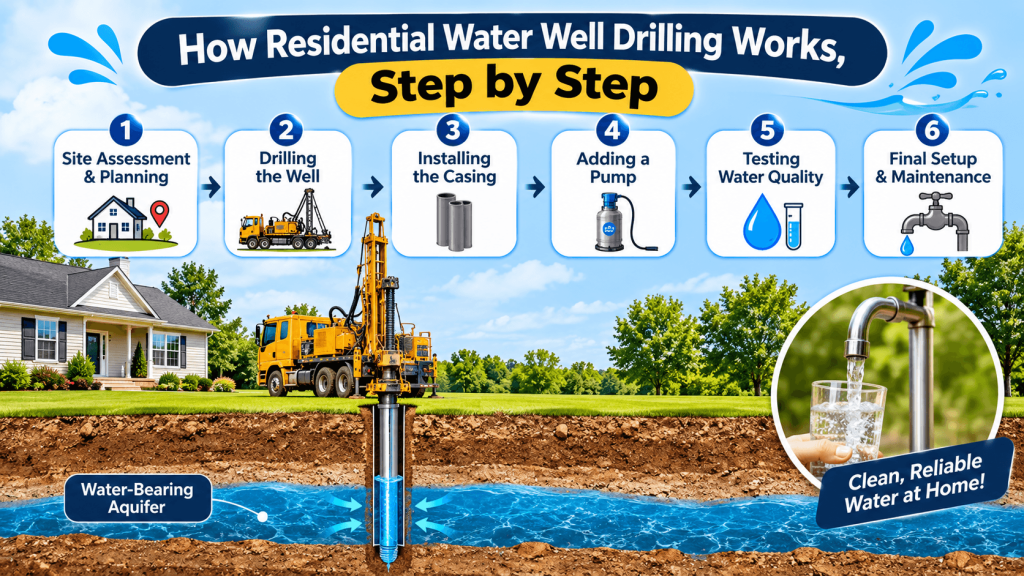
Drilling a residential well usually involves permits, choosing a site away from contamination sources, drilling to a reliable water-bearing layer, installing casing and a pump, and testing the water before use. Most steps are regulated by state or local health departments, not the federal government.
The EPA does not regulate private household wells, so owners are responsible for water quality. Knowing the process helps homeowners ask better questions.
From Permit to First Glass of Water
- Permits: most states and counties require a well permit and use licensed drillers.
- Site selection: wells must meet setback distances from septic systems, property lines, and other hazards.
- Drilling: depth depends on local geology and groundwater, which drillers estimate from nearby well records.
- Casing and grouting: casing and sealing help keep surface water and contaminants out.
- Pump and pressure tank: the system delivers water to the home.
- Water testing: test before drinking and record results.
Questions to Ask a Driller
Ask about licensing, typical depths in your area, how pricing works, and what happens if water is not found at the expected depth. Many drillers charge per foot, plus casing, pump, and other components, so get a written estimate that explains each cost.
Ask who handles permits, water testing, and well records required by the state. Confirm cleanup and site restoration after drilling, since equipment can affect lawns and driveways.
What Affects Well Drilling Costs
Costs depend largely on drilling depth, local geology, casing requirements, pump type, and distance from the house. Rocky ground often takes longer to drill than sandy soil. Additional costs may include electrical work, trenching for water lines, pressure tanks, and water treatment if testing finds problems.
Ask drillers what happens if the first site produces too little water and how that affects pricing. Clear written terms prevent surprises.
Keep copies of permits, drilling logs, and pump details together for future service visits.
Caring for a Private Well
Test water at least once a year for bacteria, nitrates, and other contaminants common in your area, and after floods or changes in taste or smell. Keep chemicals, fuel, and fertilizers away from the wellhead, and inspect the cap regularly. Your local health department can recommend tests and labs.
Experienced local drillers know regional groundwater well, and FindingU’s well drilling contractors are a practical place to begin your search. Comparing licensed drillers there helps you find experienced local teams familiar with your area’s groundwater.
Plan, Drill, Test, Maintain
A new well involves permits, careful site selection, drilling, casing, pump installation, and water testing. Ask drillers about licensing, depth, and pricing, test water every year, and protect the wellhead. FindingU can help you compare licensed well drillers near you.
Frequently asked questions
Private household wells are not regulated by the EPA under the Safe Drinking Water Act. States and local health departments usually set construction standards, permits, and driller licensing. Owners are responsible for testing and maintaining their water quality. Check with your local health department.
It depends on local geology and groundwater levels. Some wells are relatively shallow, while others go hundreds of feet deep. Licensed drillers often use nearby well records to estimate depth, but actual depth is confirmed during drilling. Your driller can explain local depths.
Many health agencies recommend testing at least once a year for bacteria and nitrates, plus other contaminants common locally. Test again after flooding, repairs, or changes in taste, color, or smell. Local health departments can suggest certified labs. Keep results in your home records.
Septic systems can release bacteria and nitrates into soil and groundwater. Required setback distances help reduce the risk of contamination. Local codes set specific distances, and drillers should plan well placement to meet them. Plan well locations with these rules in mind.